Real World Evidence and the benefits for the pharmaceutical industry
March 25, 2025
In the development of new medical treatments, randomised controlled trials (RCTs) are a tried and true way to test the efficacy and safety of a treatment.
RCTs involve the recruitment of a carefully vetted and selected patient group, which may mean that some relevant potential patient groups are less well represented (e.g. older patients). The RCT participants are then allocated to a treatment for a period of time, allowing different treatments to be compared to determine if one is better than the other.
While these RCTs are considered the gold standard method for testing new treatments, they can’t incorporate all the possible situations in which the treatment may be used. For example, they may not be able to take into account patients with several comorbidities, or environmental impacts the patient is subject to or potential drug interactions.
They’re also expensive to run, and while they are important for reducing bias and improving internal validity, the results cannot be generalised to a broad real-world population. How, then, can pharmaceutical companies understand the efficacy and safety of treatments once they are released into the ‘real world’?
Real world experiences informing the nuances of treatments
A/Prof Ben Tran and Dr Arsha Anton from the Walter and Eliza Hall Institute (WEHI) have aimed to bridge the gap between RCTs and the collection of real world clinical data, to create a more comprehensive picture of how a treatment performs in practice and answer important clinical questions.
To this end, they have been testing ‘Registry-based randomised controlled trials (RRCTs)’, utilising existing large-scale comprehensive databases to run prospective randomised trials. This enables the trials to include a broad population, including diverse sub-groups that may include older people, regional and rural patients, culturally and linguistically diverse groups and people who identify as Aboriginal and Torres Strait Island.
Other potential elements that can be monitored in RRCTs include comorbidities, drug interactions, and adverse events, as well as gaining insight into patient reported outcomes, their quality of life and their experiences within the healthcare system.
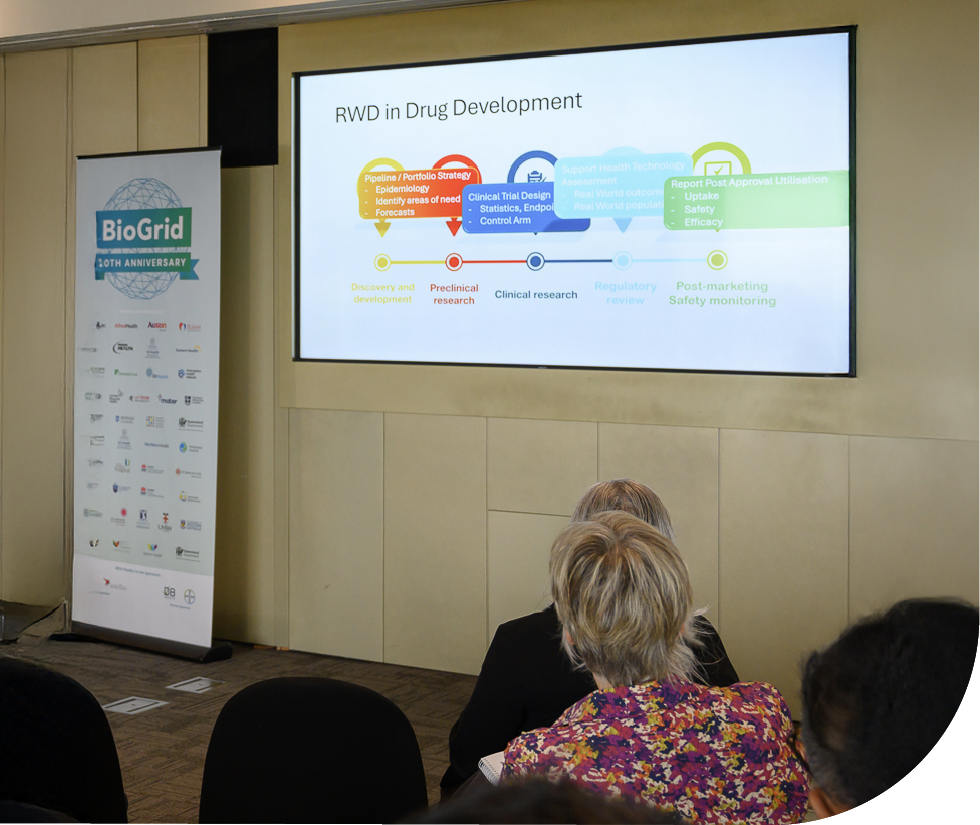
ePAD – REAL-Pro RRCT in practice for older men with prostate cancer
The concept of the RRCT was put into practice using the ePAD (electronic Prostate cancer Australian Database) initiative, developing the REAL-Pro study (Registry-based Randomised Study of Enzalutamide vs Abiraterone Assessing Cognitive Function in ELderly patients with Metastatic Castration-Resistant Prostate Cancer). Real world data from ePAD had already suggested that older men with advanced prostate cancer have greater comorbidity burdens, and receive less aggressive and fewer lines of systemic treatment. They also commonly receive oral androgen receptor pathway inhibitors (ARPIs).
The question posed by the ePAD team was: “Can we predict toxicity and optimise the treatment selection of ARPIs in older patients with prostate cancer?”
The REAL-Pro clinical trial was implemented using the existing ePAD multi-site clinical registry which is sponsored, developed and hosted by BioGrid Australia. The team recruited 76 patients aged 75 years or older, to receive androgen receptor pathway inhibitors (ARPIs), and then compared patient-reported outcomes including changes in memory, depression and falls risk.
As a result of the RRCT, the ePAD team has recommended that more consideration be made to ensuring individualised patient assessment prior to making treatment decisions in the older patient population. They’ve also developed a better understanding of the side effect profiles and drug interactions related to ARPIs, and in fact demonstrated that relevant co-morbidities and drug interactions were more common in the real world setting than previously thought.
More nuanced information but more challenging implementation
While RRCTs offer significant benefits in terms of understanding the efficacy and safety of drug treatments in the real world, they do present challenges in implementation. For example, while they provide increased inclusivity and generalisability of results, they rely on clinician interest and time commitment to discuss this additional option with patients.
This can be challenging when there are limited resources or competing trials. The team have now commenced a sub-study, aiming to further understand the perspectives of patients and clinicians regarding RRCTs, in order to understand potential barriers and develop strategies for future RRCT designs and implementation.